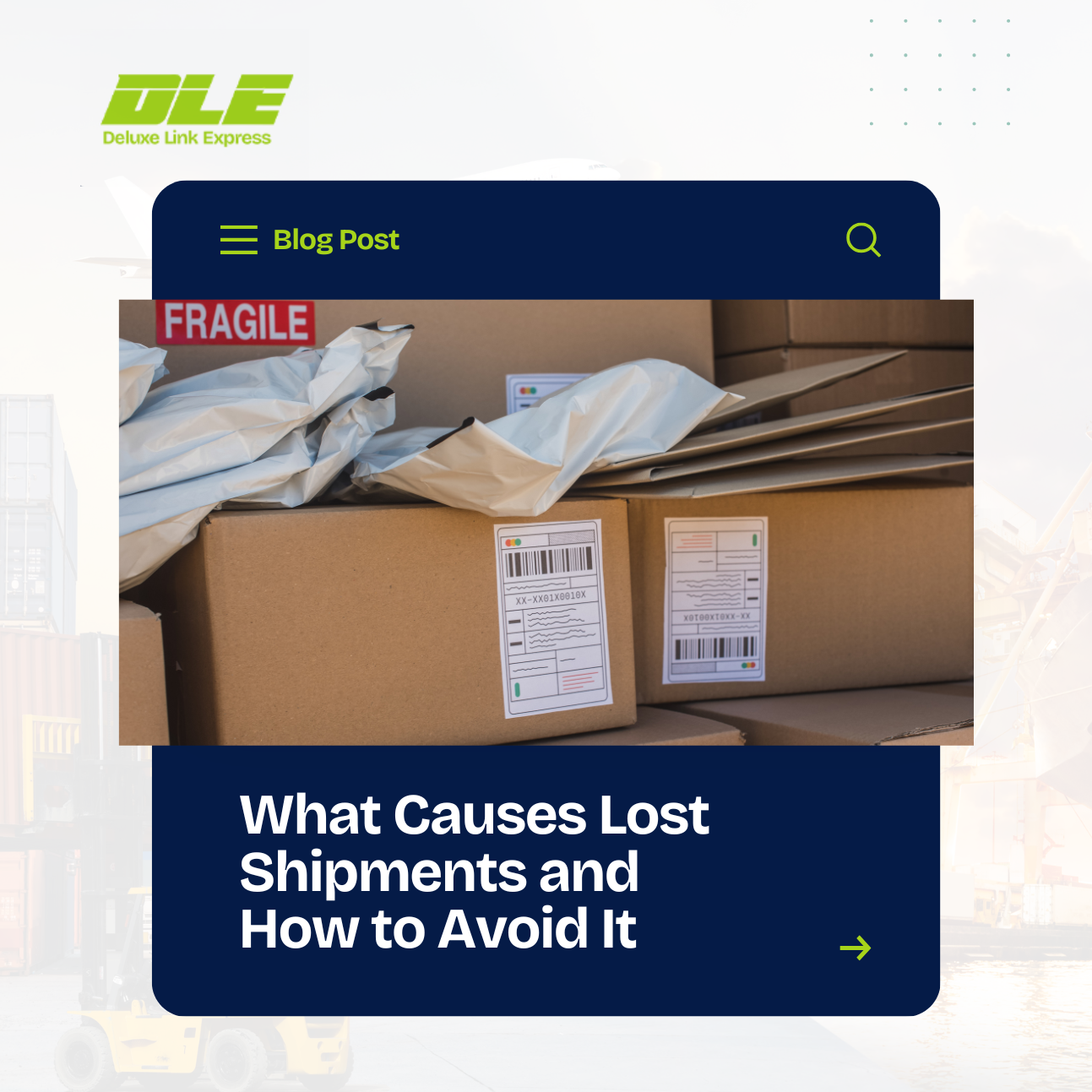
Lost shipments are more than just an inconvenience they can damage customer trust, increase operational costs, and hurt business reputation. Whether you run an eCommerce store, manage supply chains, or frequently send packages internationally, understanding why shipments get lost and how to prevent it is essential.
At Deluxe Link Express, we understand how critical timely and secure deliveries are for businesses and individuals alike. In this guide, we’ll break down the common causes of lost shipments and share practical strategies to help you reduce shipping risks and improve delivery success rates.
What Is a Lost Shipment?
A lost shipment refers to a package or cargo that fails to reach its intended destination and cannot be immediately located within the shipping network. This can happen during transportation, sorting, customs clearance, or final delivery.
Lost shipments affect businesses in many ways, including:
- Delayed customer orders
- Increased refund and replacement costs
- Poor customer satisfaction
- Negative online reviews
- Disrupted supply chains
Understanding the root causes can help businesses build a more reliable shipping process.
Common Causes of Lost Shipments
1. Incorrect Shipping Information
One of the leading causes of lost packages is inaccurate or incomplete shipping details. Even a small typo in the recipient’s address, ZIP code, or contact number can send a shipment to the wrong location.
Common address mistakes include:
- Missing apartment or suite numbers
- Wrong postal codes
- Spelling errors in street names
- Outdated customer addresses
How to Avoid It
- Double-check shipping labels before dispatch
- Use address verification tools
- Encourage customers to confirm delivery details during checkout
2. Poor Packaging and Label Damage
Damaged labels or poorly packaged items can make it difficult for couriers to scan and track shipments properly. If the barcode becomes unreadable, packages may be misplaced within sorting facilities.
How to Avoid It
- Use durable packaging materials
- Protect labels with waterproof coverings
- Place duplicate shipping information inside the package
- Use high-quality printing for barcodes and labels
Proper packaging also reduces the chances of shipment damage during transit.
3. Human Errors in Warehouses and Sorting Centers
Logistics operations involve multiple handling points. Human errors during sorting, scanning, or loading can result in packages being misplaced or routed incorrectly.
How to Avoid It
- Work with reputable logistics companies
- Use automated inventory and tracking systems
- Implement barcode scanning at every transit point
- Conduct regular staff training on shipment handling procedures
Reliable courier services often use advanced logistics technology to minimize these operational errors.
4. Missing or Delayed Tracking Updates
Customers become concerned when shipment tracking stops updating for several days. In some cases, the package is still moving through the network but lacks proper scan updates.
How to Avoid It
- Choose shipping providers with real-time tracking systems
- Monitor shipments proactively
- Enable automated shipment notifications for customers
- Investigate tracking delays immediately
Real-time package tracking improves transparency and customer confidence.
5. Customs Clearance Issues for International Shipping
International shipments may get delayed or lost due to customs documentation errors, restricted items, or unpaid duties.
Common customs-related problems:
- Incomplete invoices
- Incorrect product descriptions
- Missing export/import documentation
- Non-compliance with destination country regulations
How to Avoid It
- Ensure all customs forms are accurate
- Use clear and detailed product descriptions
- Partner with experienced international shipping companies
- Stay informed about import/export regulations
Efficient customs processing is critical for successful global shipping.
6. Theft and Package Tampering
Unfortunately, package theft remains a growing issue, especially for residential deliveries and high-value goods.
How to Avoid It
- Require signature confirmation upon delivery
- Use secure delivery lockers or pickup points
- Insure valuable shipments
- Choose trusted courier and freight services
Shipment insurance can provide additional financial protection against losses.
7. Weather Conditions and Transportation Disruptions
Severe weather, road closures, flight cancellations, and port congestion can interrupt shipping operations and increase the risk of lost cargo.
How to Avoid It
- Plan shipments ahead during peak seasons
- Monitor weather and transportation updates
- Use logistics providers with flexible routing systems
- Maintain communication with customers about delays
Strong logistics planning helps reduce disruptions caused by external factors.
Best Practices to Prevent Lost Shipments
Reducing shipment loss requires a combination of technology, operational efficiency, and reliable logistics partnerships.
Here are some proven best practices:
Use Advanced Shipment Tracking
Modern tracking systems provide real-time visibility from dispatch to delivery.
Invest in Quality Packaging
Secure packaging protects products and keeps shipping labels intact.
Partner With Trusted Logistics Providers
Reliable shipping companies have systems in place to minimize package mishandling and delivery failures.
Keep Customers Informed
Automated email and SMS updates improve customer experience and reduce delivery confusion.
Insure High-Value Shipments
Shipping insurance offers peace of mind for expensive or sensitive goods.
Maintain Accurate Inventory Records
Warehouse management systems help prevent fulfillment and shipping errors.
Final Thoughts
Lost shipments can negatively impact both businesses and customers, but many shipping problems are preventable. By improving packaging, verifying shipping information, using real-time tracking, and working with experienced logistics providers, businesses can significantly reduce the risk of package loss.
As global shipping continues to grow, companies that invest in reliable logistics and proactive shipment management will stand out in customer satisfaction and operational efficiency.
If you’re looking for secure, efficient, and dependable delivery services, Deluxe Link Express is committed to helping your shipments arrive safely and on time.
Related Services
Related Posts


MARKETING EXECUTIVE
14 Aug 2026
MARKETING EXECUTIVE
13 Aug 2026

MARKETING EXECUTIVE
13 Aug 2026