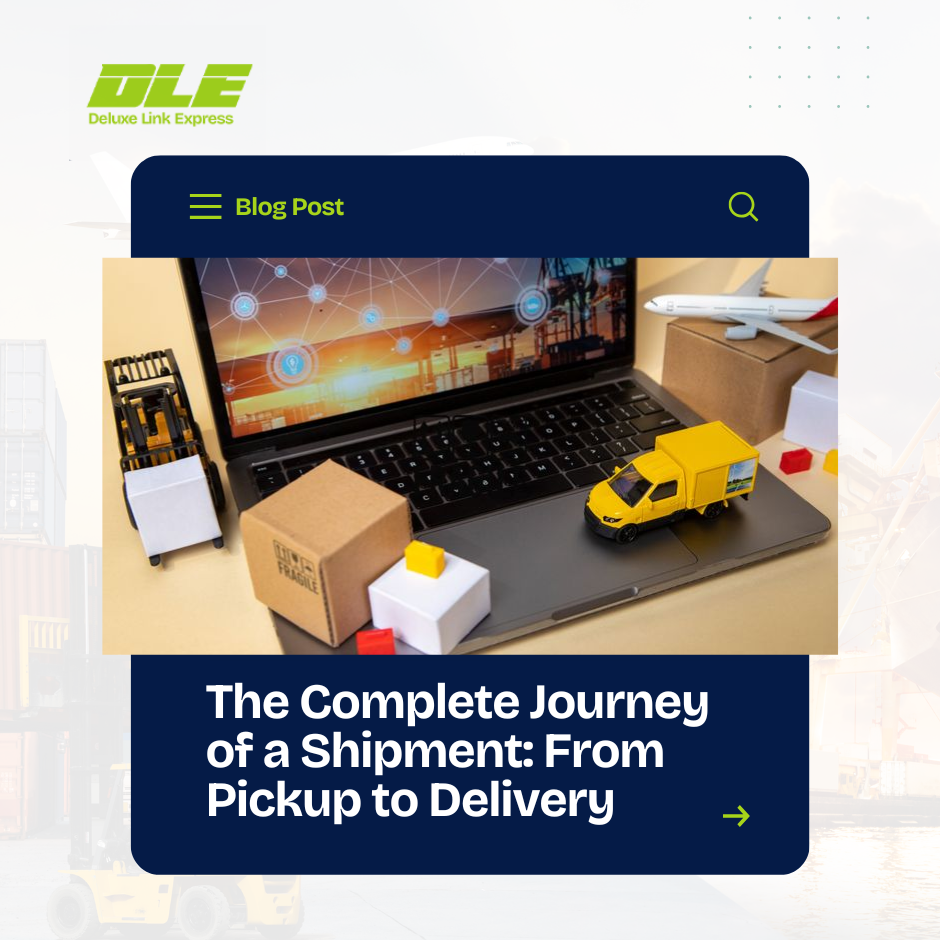
Whether you are sending an important business document, fulfilling an online order, or transporting goods across Nigeria, every shipment follows a carefully planned process before it reaches its destination.
Many customers simply hand over a package and wait for the delivery notification. Behind the scenes, however, several coordinated steps take place to ensure the shipment arrives safely, on time, and in good condition.
Understanding the journey of a shipment helps businesses appreciate the value of working with a reliable logistics partner and highlights why proper planning, tracking, and communication matter throughout the delivery process.
In this guide, we will walk you through every stage of a shipment from pickup to final delivery.
Step 1: Shipment Request and Booking
Every successful delivery begins with a shipment request.
Depending on the logistics provider, customers can schedule a pickup through a website, mobile app, phone call, or customer service representative.
During booking, important information is collected, including:
- Pickup address
- Delivery address
- Package dimensions and weight
- Type of goods
- Preferred delivery timeline
- Contact information
Providing accurate details at this stage helps prevent delays later in the shipping process.
Step 2: Package Pickup
Once the booking is confirmed, a dispatch rider or logistics officer arrives to collect the shipment.
At pickup, the package is inspected to ensure it is:
- Properly packaged
- Correctly labeled
- Suitable for transportation
- Free from prohibited or restricted items
Businesses that package items securely significantly reduce the risk of damage during transit.
For fragile or high-value goods, using protective materials such as bubble wrap, cartons, and cushioning can make a significant difference.
Step 3: Sorting and Processing
After collection, shipments are transported to a sorting facility or logistics hub.
This is where packages are:
- Scanned into the tracking system
- Assigned unique identifiers
- Sorted based on destination
- Grouped for efficient transportation
Modern logistics companies use digital tracking systems to improve shipment visibility and reduce manual errors.
This stage is essential because it ensures every package is routed through the most efficient delivery network.
Step 4: Transportation to the Destination Hub
Once sorted, shipments begin their journey toward the destination.
Depending on the delivery location, transportation may involve:
- Delivery vans
- Trucks
- Motorcycles
- Air freight for long-distance deliveries
- Multiple logistics hubs
Route planning plays an important role here. Logistics providers use route optimization to reduce travel time, fuel costs, and unnecessary delays.
Unexpected factors such as traffic, weather conditions, road closures, or public holidays may occasionally affect delivery schedules.
Step 5: Shipment Tracking and Status Updates
One of the biggest improvements in modern logistics is real-time shipment tracking.
As your package moves through different stages, tracking updates may include:
- Pickup completed
- In transit
- Arrived at sorting facility
- Out for delivery
- Delivered successfully
Tracking gives businesses and customers greater visibility, allowing them to monitor progress without making repeated inquiries.
For businesses handling multiple customer orders daily, shipment tracking also improves customer communication and overall service experience.
Step 6: Last-Mile Delivery
Last-mile delivery is the final stage before the shipment reaches the recipient.
Although it is the shortest part of the journey, it is often the most challenging because it involves:
- Navigating traffic
- Locating delivery addresses
- Contacting recipients
- Managing delivery schedules
- Confirming successful handover
Efficient last-mile delivery is one of the biggest factors influencing customer satisfaction.
When deliveries arrive on time and in good condition, customers are more likely to order again.
Step 7: Delivery Confirmation
The shipment journey concludes once the recipient receives the package.
Depending on the service, confirmation may include:
- Recipient signature
- Delivery confirmation message
- Digital proof of delivery
- Photo confirmation (where applicable)
This provides accountability for both the sender and the logistics provider.
For businesses, delivery confirmation also helps close customer orders and maintain accurate delivery records.
What Can Delay a Shipment?
Even with efficient logistics systems, certain factors can affect delivery timelines.
Common causes include:
- Incorrect delivery addresses
- Incomplete contact information
- Poor packaging
- Heavy traffic
- Extreme weather
- Vehicle breakdowns
- Security restrictions
- Recipient unavailable during delivery
Many of these delays can be avoided through accurate documentation and clear communication.
Tips for Faster and Safer Deliveries
Businesses can improve delivery success rates by following a few best practices:
- Package products securely.
- Label every shipment clearly.
- Double-check delivery addresses and phone numbers.
- Book shipments early during peak periods.
- Choose a logistics provider with reliable tracking systems.
- Keep customers informed about delivery progress.
Small improvements in shipping processes often lead to better customer experiences and fewer delivery issues.
How Deluxe Link Express Supports Every Stage of the Shipment Journey
At DLE, every shipment is handled with a focus on reliability, visibility, and timely delivery.
From the moment your package is collected until it reaches its destination, our logistics process is designed to provide:
- Professional pickup services
- Secure shipment handling
- Efficient routing
- Real-time tracking
- Reliable last-mile delivery
- Responsive customer support
Whether you\'re an individual sending a parcel or a business managing regular deliveries, our goal is to make every shipment as smooth and dependable as possible.
Frequently Asked Questions
How long does a shipment usually take?
Delivery timelines depend on factors such as destination, shipment type, distance, and the selected delivery service. Local deliveries are generally completed faster than inter-state or international shipments.
Why is shipment tracking important?
Shipment tracking provides real-time visibility into your package\'s location, helping businesses and customers stay informed throughout the delivery process.
What is last-mile delivery?
Last-mile delivery is the final stage of the logistics process, where a shipment is transported from the nearest distribution hub to the recipient\'s address.
How can I reduce shipping delays?
Use accurate delivery information, package items securely, book shipments early, and work with a trusted logistics company that provides reliable tracking and customer support.
Related Services
Related Posts

MARKETING EXECUTIVE
14 Aug 2026
MARKETING EXECUTIVE
13 Aug 2026

MARKETING EXECUTIVE
13 Aug 2026