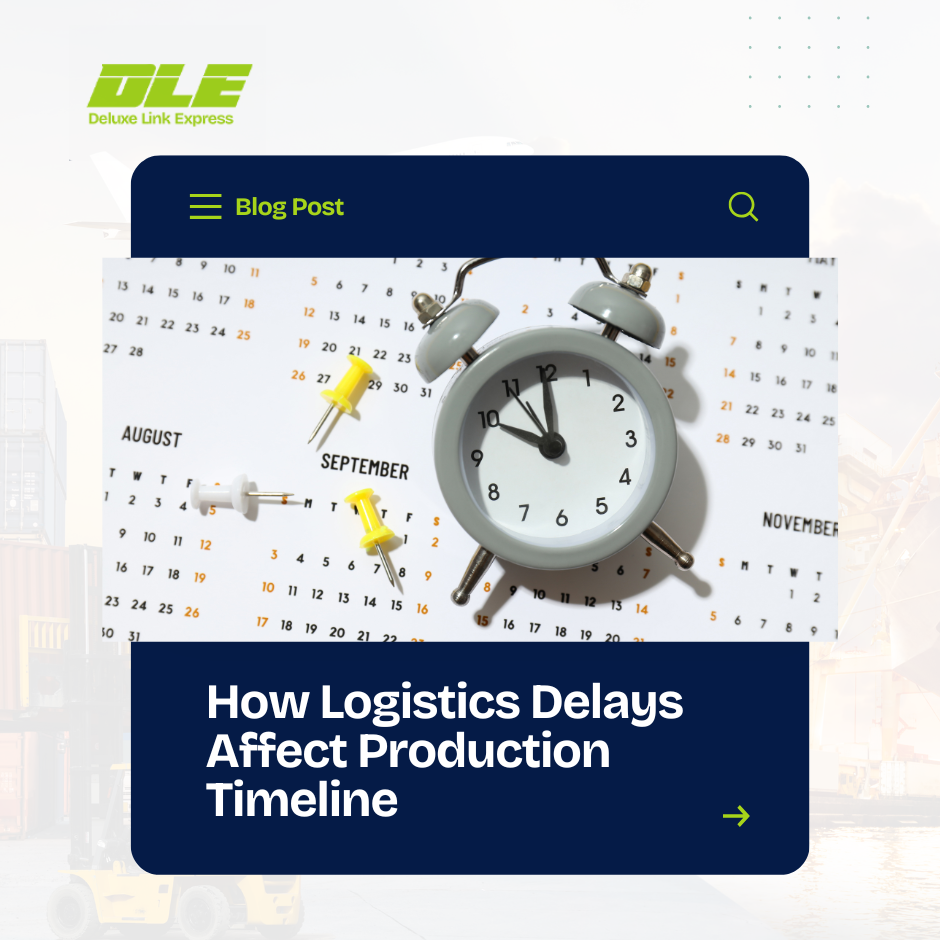
How Logistics Delays Affect Production Timelines
A production line can come to a halt for many reasons, but one of the most common and costly reasons is a delay in the movement of materials and goods. When raw materials, components, or packaging arrive late, the impact extends far beyond a delayed shipment. Production schedules shift, operating costs increase, customer commitments become harder to meet, and businesses may struggle to keep up with demand.
At Deluxe Link Express, we\'ve seen how even minor disruptions in the movement of goods can affect business operations. That\'s why we understand that for manufacturers and businesses that rely on a steady flow of inventory, logistics is more than transportation it\'s a critical part of operational success. Understanding how logistics delays affect production timelines can help businesses identify weak points in their supply chain and make informed decisions that keep operations running efficiently.
Why Logistics Plays a Bigger Role Than Many Businesses Realize
Production planning is built around one simple assumption: the right materials will be available when they are needed.
A delay at any point in the supply chain can interrupt production, forcing teams to adjust schedules, postpone deliveries, or pause operations altogether.
That\'s why efficient logistics is essential not only for moving goods but for keeping the entire production process on track.
Common Causes of Logistics Delays
While some disruptions are unavoidable, many production delays can be traced back to common logistics challenges, including:
- Transportation disruptions such as traffic congestion, vehicle breakdowns, or poor road conditions.
- Supplier delays that postpone the dispatch of raw materials or components.
- Customs and documentation issues affecting imported goods.
- Poor inventory planning that leaves little buffer when deliveries are delayed.
- Limited shipment visibility, making it difficult to respond before production is affected.
Recognizing these risks allows businesses to plan ahead rather than react when problems occur.
How Logistics Delays Affect Production Timelines
1. Production Downtime
When essential materials don\'t arrive on time, production lines slow down or stop completely. Even a short delay can leave equipment idle and employees waiting, reducing productivity while operating costs continue to rise.
2. Higher Operating Costs
Unexpected logistics disruptions often lead to expenses businesses didn\'t budget for, including expedited shipping, overtime, additional storage, and production rescheduling. Over time, these costs can significantly reduce profit margins.
3. Missed Delivery Commitments
When production falls behind schedule, customer orders are delayed as well. Repeated late deliveries can damage customer trust, affect long-term contracts, and make it more difficult to compete in today\'s fast-moving market.
4. Inventory Imbalances
Late inbound deliveries can create material shortages, while delayed outbound shipments can result in excess inventory occupying valuable warehouse space. Both situations increase costs and reduce operational efficiency.
5. Supply Chain Disruptions
A logistics delay rarely affects just one department. Procurement, production, warehousing, distribution, and customer service often feel the impact, creating bottlenecks across the business.
How Businesses Can Reduce Logistics-Related Production Delays
Although no supply chain is immune to disruption, businesses can significantly reduce delays with better planning and stronger logistics partnerships.
Improve Inventory Planning
Accurate demand forecasting and maintaining appropriate safety stock help reduce the risk of production stopping because essential materials are unavailable.
Strengthen Supplier Communication
Regular communication with suppliers makes it easier to identify potential delays early and adjust production schedules before they become costly.
Monitor Shipments in Real Time
Real-time shipment tracking gives businesses greater visibility into the movement of goods, allowing teams to respond quickly when delays occur and keep stakeholders informed.
Work With a Reliable Logistics Partner
An experienced logistics provider helps businesses coordinate transportation, manage documentation, optimize delivery routes, and respond more effectively when unexpected disruptions arise.
Why Reliable Logistics Is a Competitive Advantage
Businesses often focus on improving production speed, but consistency is equally important.
When logistics operations run smoothly, manufacturers can maintain production schedules, control operating costs, fulfill customer orders on time, and respond more effectively to changing demand.
Reliable logistics doesn\'t just keep products moving it helps businesses build stronger customer relationships and operate with greater confidence.
Final Thoughts
Production efficiency isn\'t determined solely by what happens inside the factory. It depends just as much on what happens before materials arrive and after products leave the production floor.
By improving inventory planning, strengthening supplier coordination, and partnering with a dependable logistics provider, businesses can reduce unnecessary delays and keep production timelines on track.
At Deluxe Link Express, we understand that every shipment plays a role in your operations. Our logistics solutions are designed to help businesses move goods efficiently, minimize avoidable disruptions, and support a more resilient supply chain.
Frequently Asked Questions
How do logistics delays affect production timelines?
Logistics delays interrupt the flow of raw materials and components needed for manufacturing. This can lead to production downtime, higher operating costs, delayed customer orders, and reduced overall efficiency.
What are the main causes of logistics delays?
Common causes include transportation disruptions, supplier delays, customs clearance issues, poor inventory planning, and limited visibility across the supply chain.
How can businesses reduce production delays caused by logistics?
Businesses can reduce delays by improving inventory forecasting, maintaining safety stock, monitoring shipments in real time, strengthening supplier relationships, and working with an experienced logistics partner.
Why is logistics important in manufacturing?
Logistics ensures materials and finished goods move efficiently throughout the supply chain. Reliable logistics helps manufacturers maintain production schedules, reduce downtime, control costs, and meet customer expectations.
Related Services
Related Posts


MARKETING EXECUTIVE
14 Aug 2026
MARKETING EXECUTIVE
13 Aug 2026

MARKETING EXECUTIVE
13 Aug 2026